
Today’s blog post is all about teaching context clues and tricky unknown words and phrases in an informational text! Teaching context clues in nonfiction texts is one of those essential reading skills that shows up in every elementary grades. In nonfiction reading, these clues often come from definitions, examples, or even text features, so students need plenty of chances to see them in action. Find 6 teaching tips for context clues below!
1. Introduce Standard Expectations

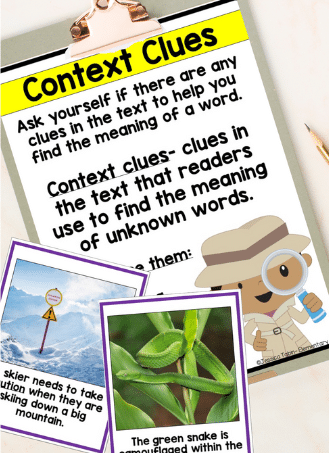
Use an anchor chart to teach your students how to use context clues while reading nonfiction texts. The chart breaks down strategies like looking at the word parts, reading the full sentence, and using schema to infer meaning. Display this in your classroom for quick reference during reading lessons or literacy centers.
2. Use a Teaching Video for Visual Learners

For your visual learners, it’s always nice to have a teaching video to follow up your lessons. This BrainPop video helps students visually see how authors provide hints for understanding unknown words. This strategy supports auditory and visual learners while reinforcing vocabulary growth. Use it as a lesson introduction, review, or small group activity to make context clue practice interactive and meaningful.
3. Model, Model, Model
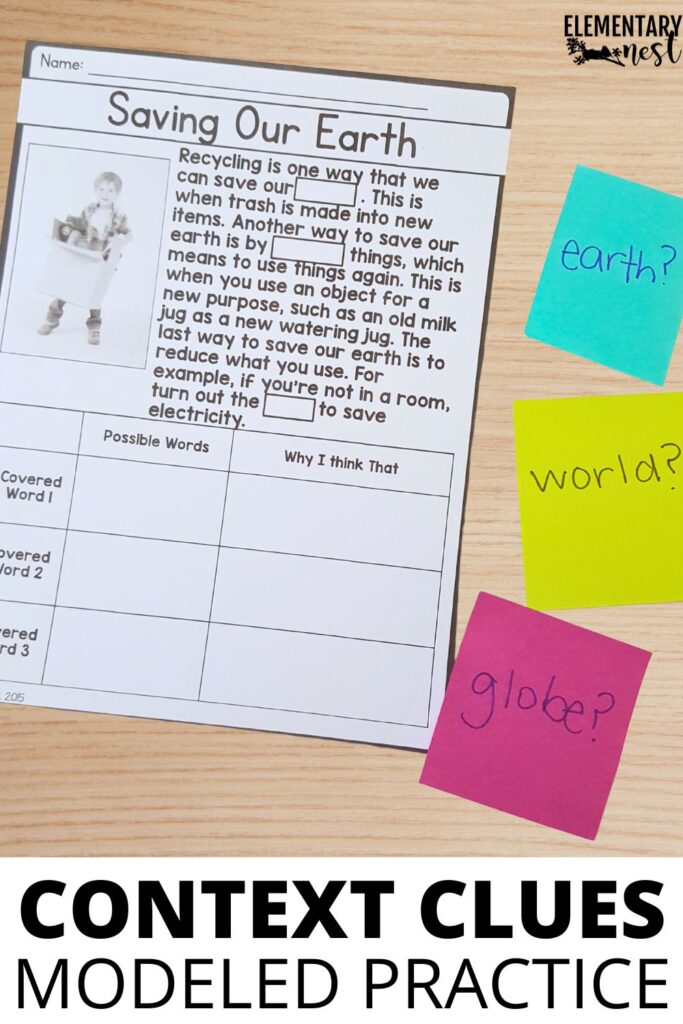
After introducing context clues, show students hands-on practice with nonfiction passages. You can show them how to identify unknown words and highlight clues that help define them. Plus, using sticky notes or graphic organizers keeps the activity interactive and fun!
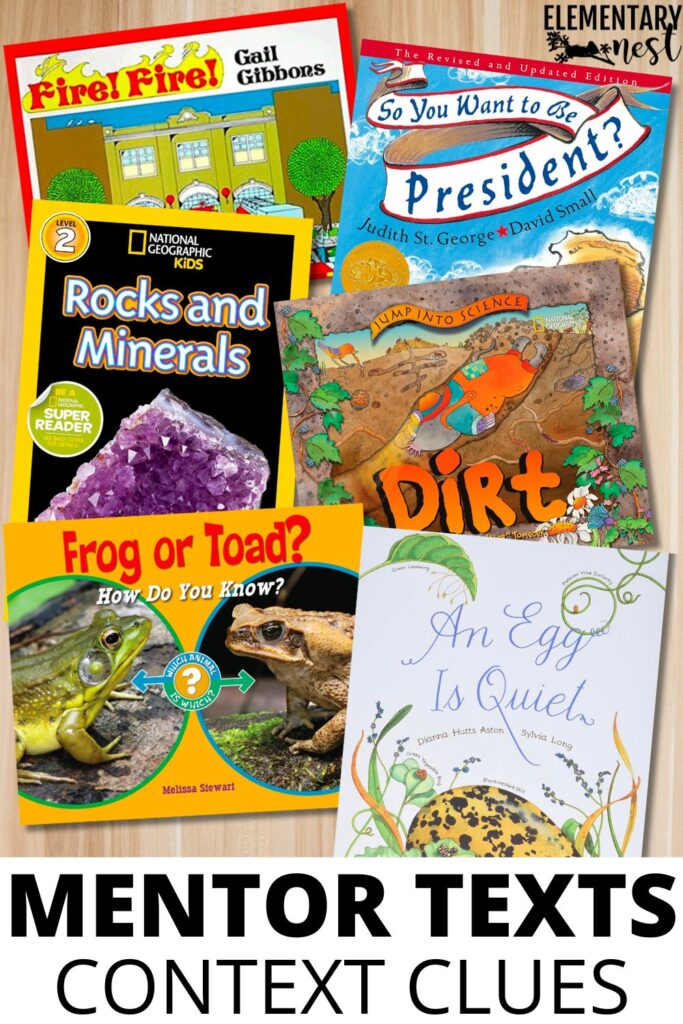
Give students a strong idea of what it’s like to dive into text and tackle difficult vocabulary. The best way to do this is to have daily nonfiction read alouds. Here are a few strong read alouds. I suggest to get your unit started. All the book links in this blog post are affiliate Amazon links.
- Fire! Fire! by Gail Gibbons
- So You Want to Be President by Judith St. George
- Rocks and Minerals by Kathleen Zohfeld
- Jump into Science: Dirt by Tomecek
- Frog or Toad? How Do You Know by Melissa Stewart
- An Egg is Quiet by Dianna Hutts Aston
4. Teach Context Cues Without Texts
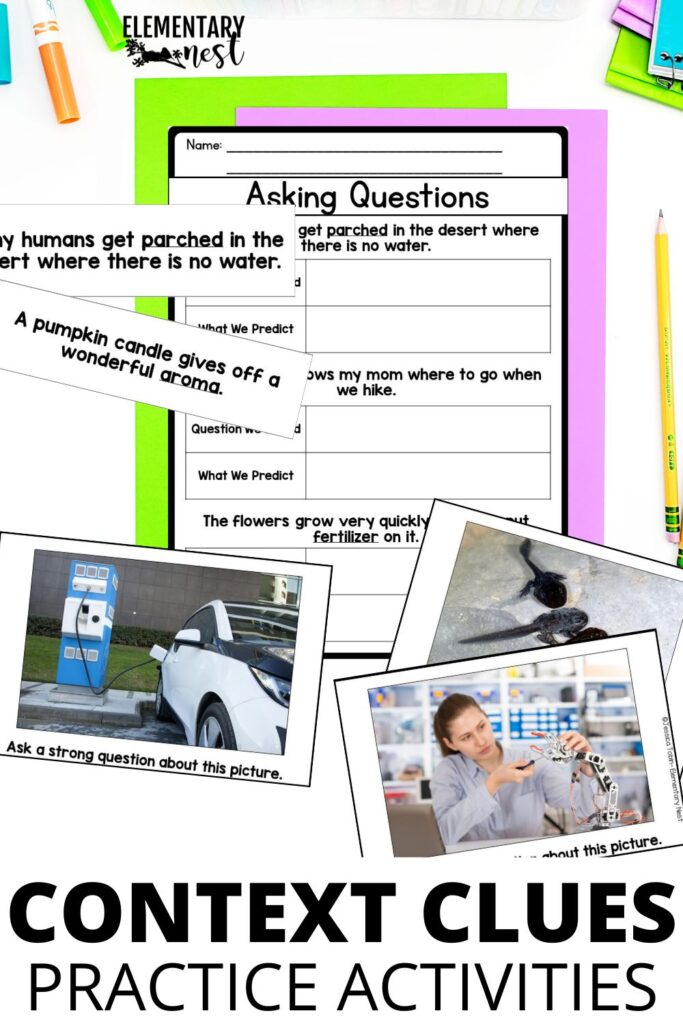
It’s a very strong practice to teach the skill of using context clues outside of difficult texts. For example, use an image and sentence and have them start there. This will help them to work on determining how to ask a question and use context around the word or idea.

In older grades, you can begin teaching the specific ways that context clues show up in texts. Above, there is a fourth-grade mini-lesson activity where the fourth graders are having a content lesson and learning the process of HOW to find meanings of unknown words. They’re putting together puzzles about definitions, synonyms, and explanations. In this way, they can really study and understand the ways that they’ll learn new vocabulary.
5. Teach Context Clues With Texts
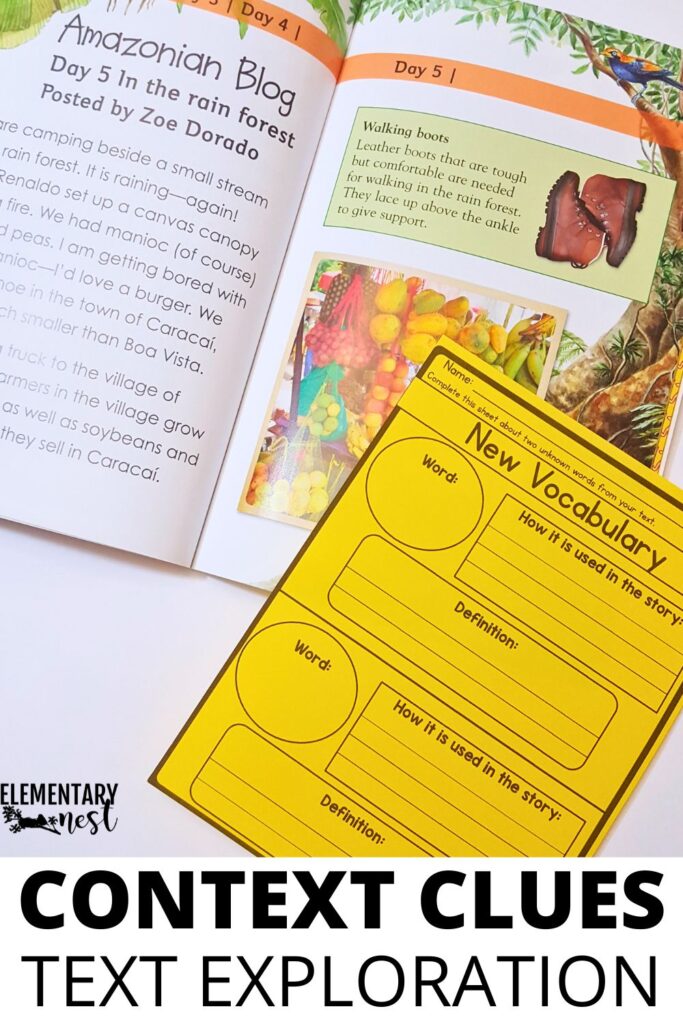
After you teach the lessons about what context clues are and how to use them to determine difficult vocabulary in a text, you can start incorporating texts into the standard. The reason I like to start with simple sentences or paragraphs before diving into books and passages is that the strategy itself is quite difficult. So, adding in harder content makes finding vocabulary meaning even harder! So let’s dive into teaching context clues with passages.
Try Sticky Notes Activities
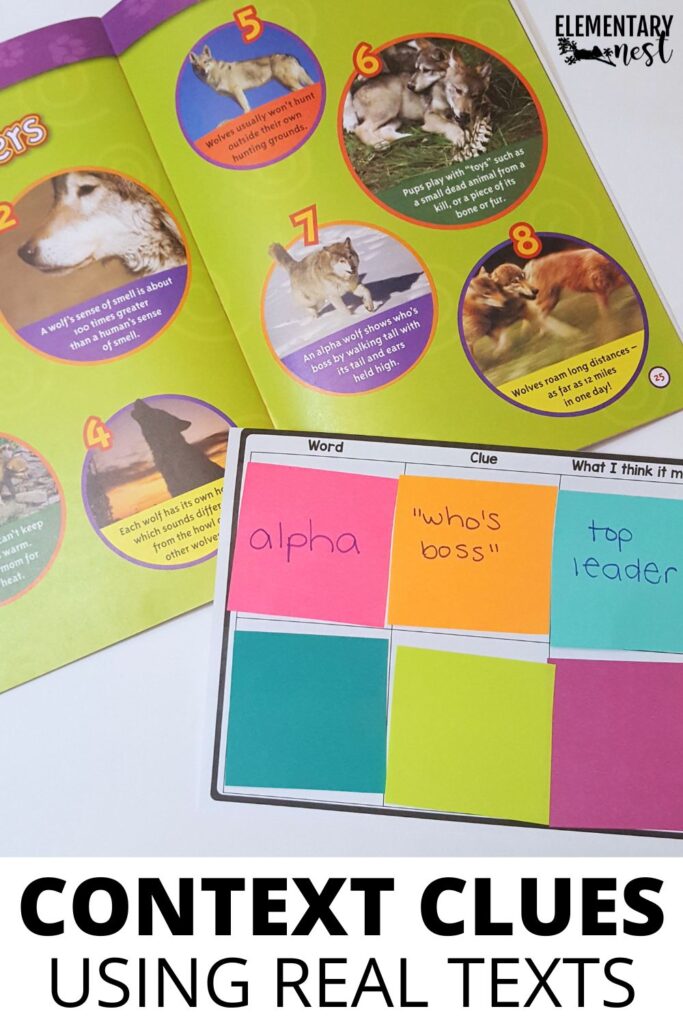
Sticky note activities are incredibly useful for this standard. This is because you can use the sticky notes in many ways. One way to use sticky notes is for brainstorming, so when students come across difficult vocabulary, they can jot down the vocabulary to look up and study later. Or, they can stop and record the word and what they infer its meaning is, using the context clues around it.
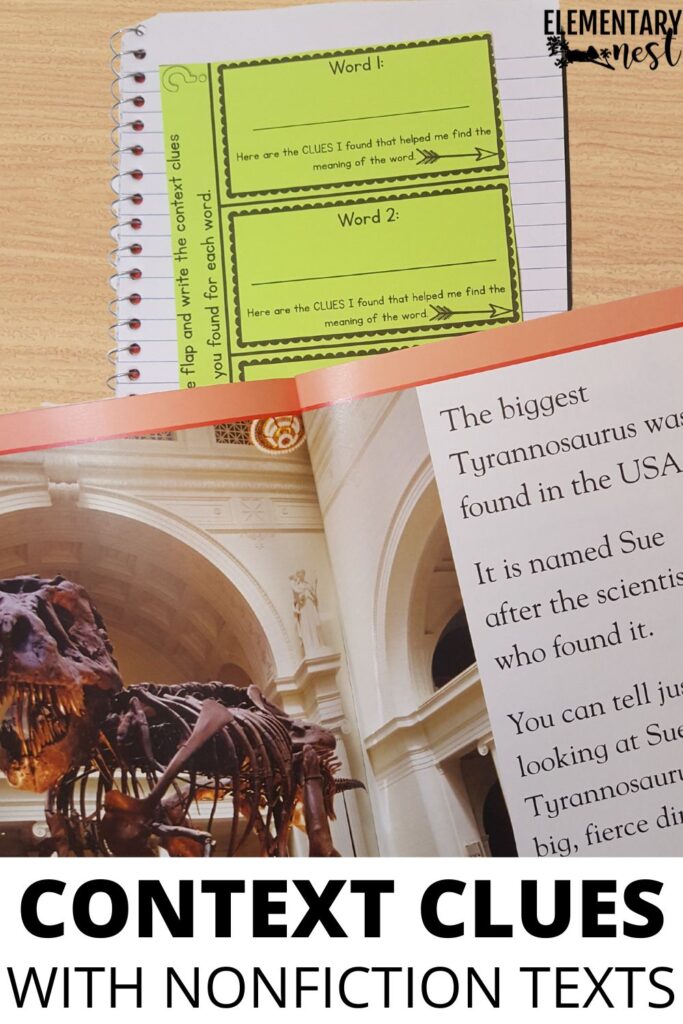
Interactive notebook pages and graphic organizers are great for students who are practicing their context clues skills, as well. Having options (whether printable or digital) for students to use during their read to self or partner reading time is a great idea!
6. Schedule in Spiral Review Throughout Year
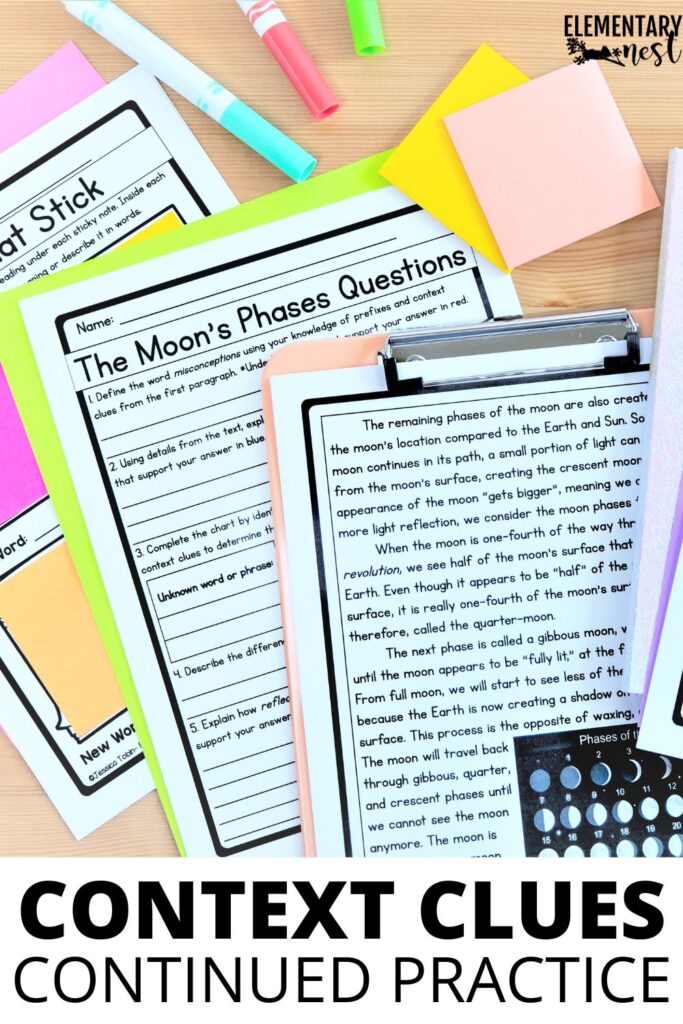
Now that you’ve taught your unit context clues and difficult vocabulary, it’s time to bring in all the materials to practice. Work these into small groups, independent reading time, partner reading time, center games, and more!
Vocabulary printables and graphic organizers will work for any informational text, too. So, if you want to have them practice and review the skills, let them choose any informational text that they want, but give them these standards-based worksheets to keep them intentional about their reading.
Grab Ready-to-Go Mini Lessons, Passages, & Worksheets:
Find standards-based learning for grades Kindergarten through fourth grade! Each unit comes complete with lesson plans, graphic organizers, comprehension passages, task cards, assessments, and more!

Kindergarten Context Clues RI.K.4

1st Grade Context Clues RI.1.4

2nd Grade Context Clues RI.2.4
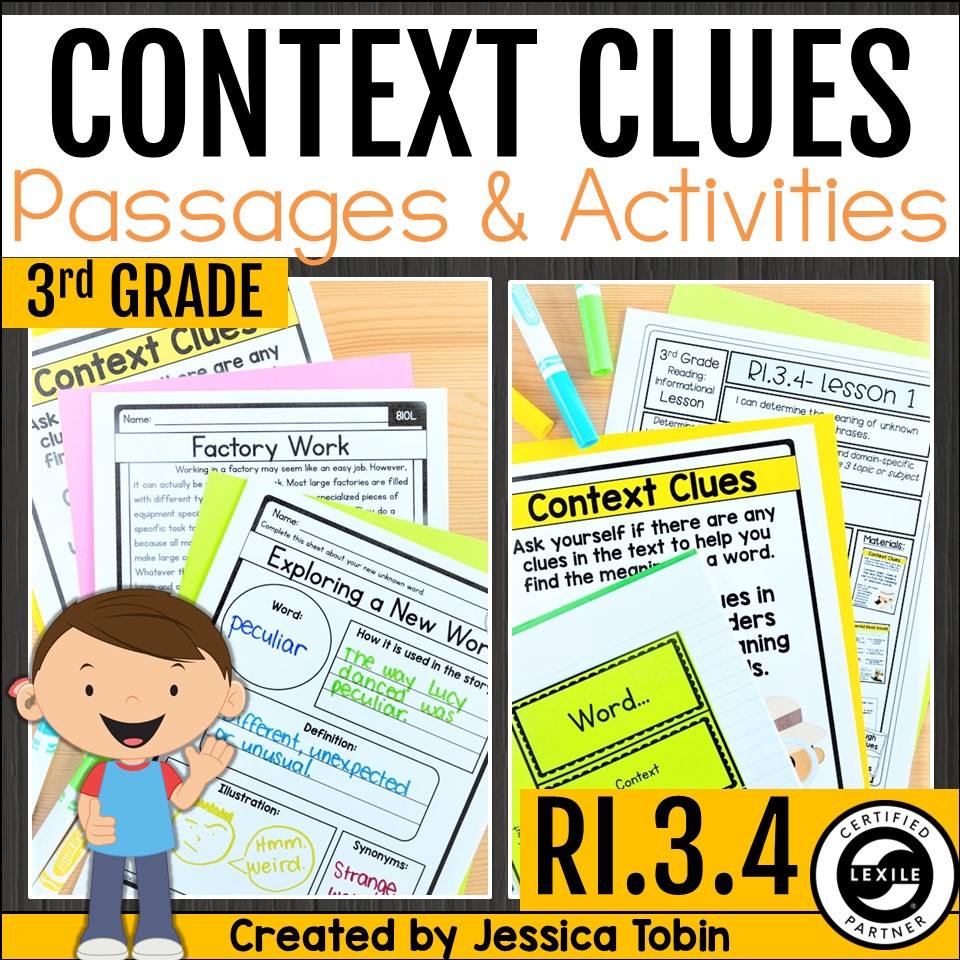
3rd Grade Context Clues RI.3.4

4th Grade Context Clues RI.4.4

5th Grade Context Clues RI.5.4
Want to read more Informational Texts blog posts?
- Go-To Blog Collection for RI Standards
- Compare and Contrast Nonfiction Texts
- Proving Author’s Point with Reasons
- Nonfiction Text Images
Want a Context Clue FREEBIE?
Simply choose your grade level: