
In my third installment of how to teach Common Core-aligned writing units, I’m going to discuss informational writing ideas for your units! We’re going to target informational writing today. I’m going to share what I think best practices are, how to break apart and scaffold the components of informational writing, and how to keep your kiddos engaged when you are teaching informational writing!
Informational Writing Common Core Expectations
Common Core writing domain focuses on three big types of writing: informative, narrative, and opinion writing! Today, we’re going to dive into the informational writing standards. It begins kindergarten and each year, gets progressively more in-depth and detailed.
Let’s Look at Informational Writing Outline
- Introduce WHAT Informational Writing is
- What are facts and definitions?
- Writing introductions
- The body: strong facts & supporting detail
- Writing conclusions
- Teach specifics such as how-to and all-about pieces
- Practice, practice, practice
Informational Writing Ideas: Suggested Mentor Texts
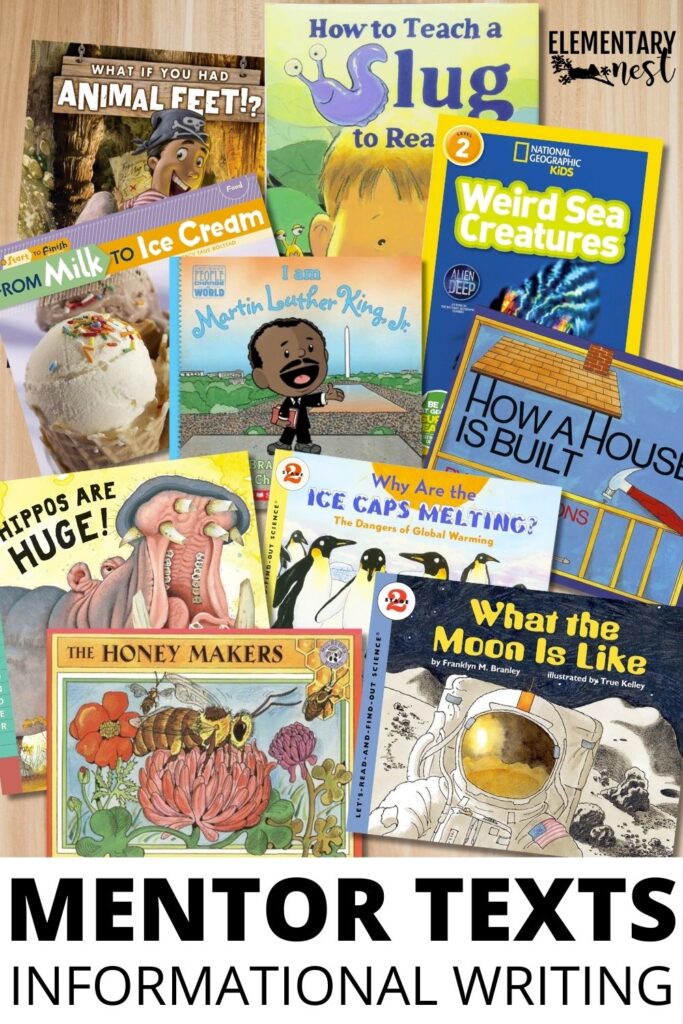
All of the components and learning pieces within this blog post should have a mentor text example along with it. Each time you teach your students about a component of narrative writing, use a strong example! Each of the book links below are affiliate links to Amazon.
- What is the Moon Like? by Franklyn Branley
- The Honey Makers by Gail Gibbons
- What If You Had Animal Feet? by Sandra Markle (entire series)
- How to Teach a Slug to Read by Susan Pearson
- Assorted National Geographic Kids Readers
- From Milk to Ice Cream by Stacy Taus-Bolstad
- I am Martin Luther King Jr. by Brad Meltzer (entire series)
- How a House is Built by Gail Gibbons
- Why are the Icecaps Melting? by Anne Rockwell
- Hippos are Huge! by Jonathan London
Let’s Start! What is Informational Writing?

Just like with the opinion writing and narrative writing blog posts, I suggest starting with teaching what informational or informative writing is. The students need to understand the components of informational writing. First, you’ll teach them the different types of informative writing. These are how-to pieces, all about pieces, biographies, articles, explanatory pieces, and more. Then, you’ll teach them the structure of informational writing pieces. This is the introduction, body, and closure.

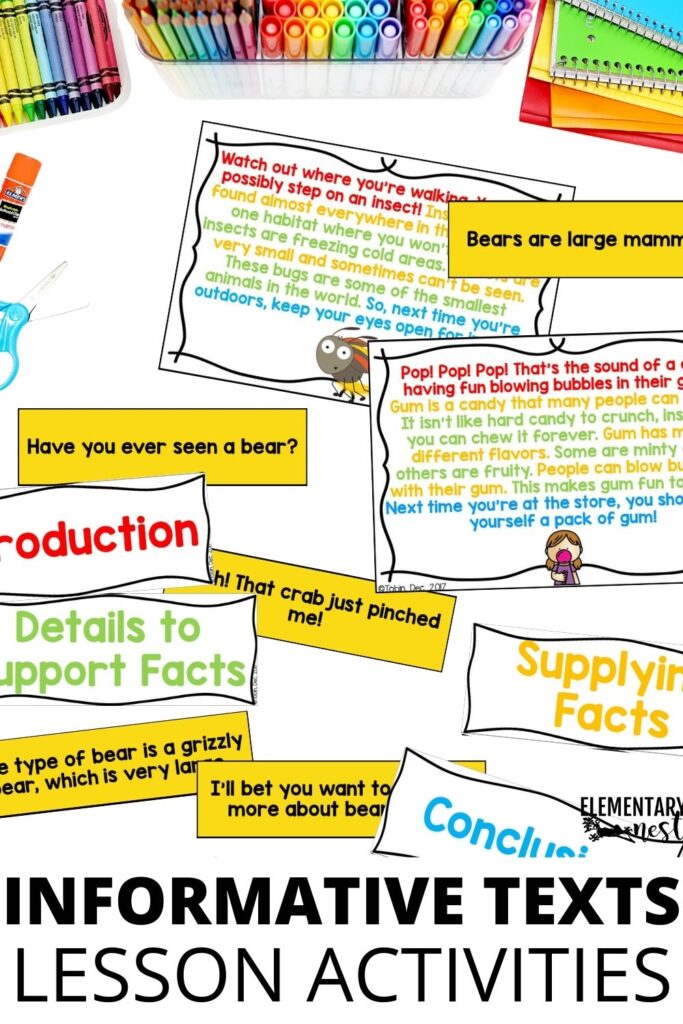
After you use an anchor chart about teaching informational writing, you can give them practice. Let them identify different examples from an informational text and which part of the structure it belongs to. In the picture above, you see two different activities. In the first activity, the teacher shows a sample writing piece that is color-coded into different parts. Then, the students will have follow-up activities where they will put the informational writing cut-outs in order. This will help them get comfortable with what is expected of them.
Big Picture: Facts and Definitions
Once you’ve taught students what informational writing is, it’s time to give them a lot of practice with facts, details, and definitions. When we did our opinion pieces, students took a day or two to simply write opinions. We will do the same with informative writing. Students will need to practice simply writing facts and definitions because they must include only facts, definitions, and details in their informational writing.
Here are two activities to practice fact writing. First, the students will get a topic card and have to come up with a sentence about that topic. This will help them practice facts, instead of opinion sentences or even narrative sentences. For example, you want a student to draw a card such as working dogs and say, “Working dogs can have real jobs, such as airport security,” instead of “I think working dogs are helpful” and “I once saw a working dog helping a police officer”. This helps shift their mindset to only facts and definitions. Then, you can have students independently practice fact writing with informational writing graphic organizers or flip books.
Teaching Informational Writing Introductions

You’ve taught what informational writing is and how to focus on facts. Now, it’s time to dive into the structure of teaching informational writing. First, you’re going to teach students about writing introductions. Begin by teaching them the different ways that you can introduce a writing piece. They can use a fact or statistic to open their piece. Or they could include a quote or an anecdote. You’re trying to teach them to hook their reader to interest them in their writing topics.
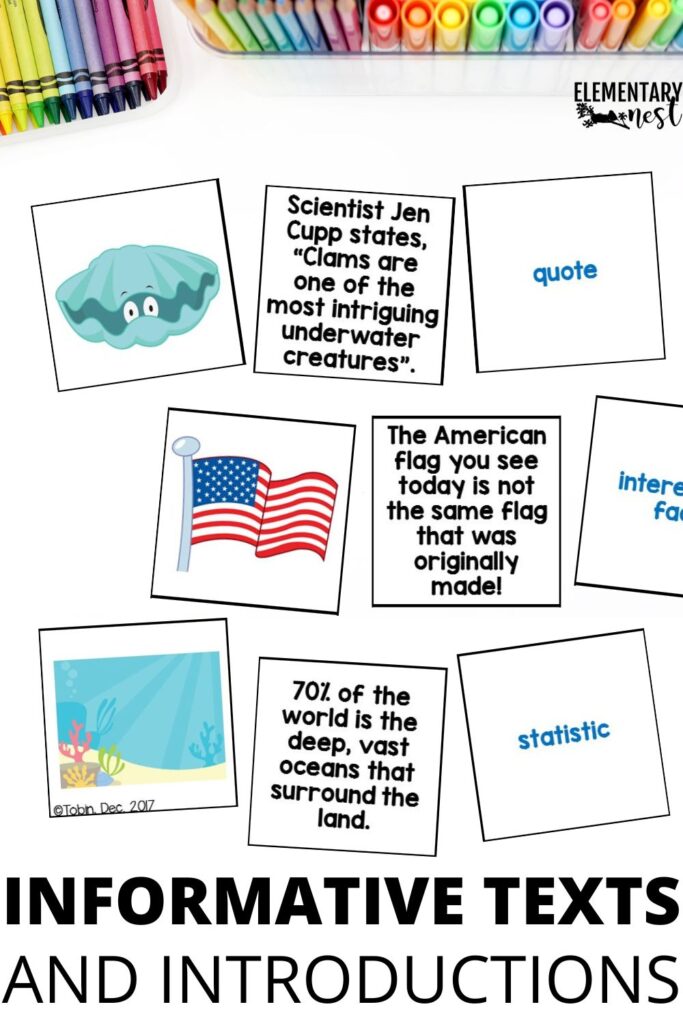
Give students lots of different ways to practice this, such as matching games where they’re working with real examples. You can also give them writing practice where they have a topic and they have to come up with their own introduction.
The Body: Facts & Details
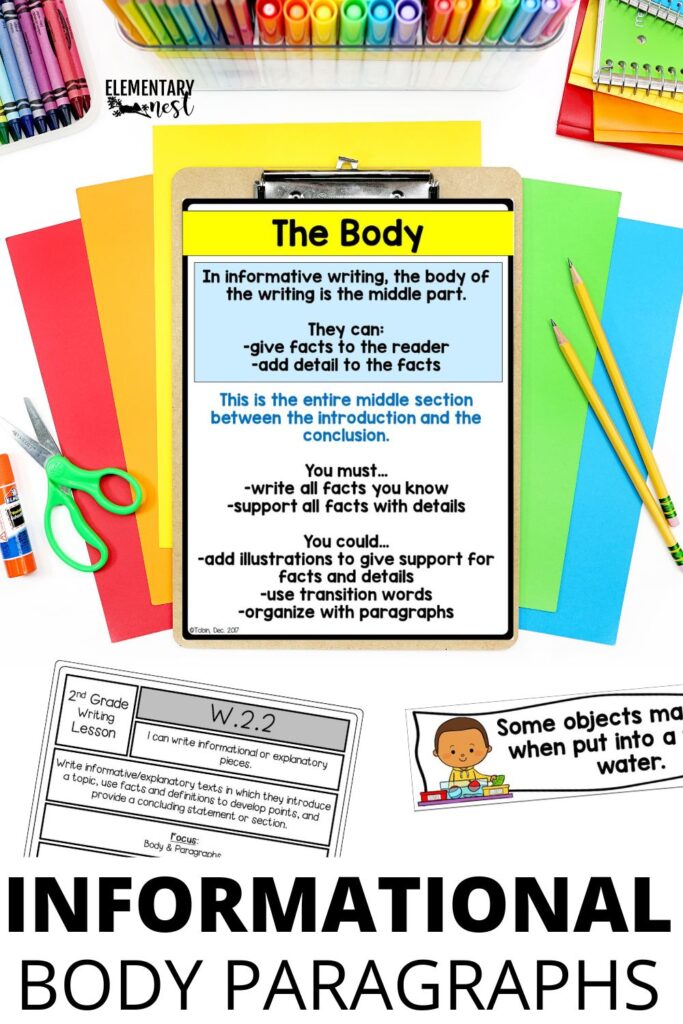
Now, we can move on to the biggest chunk of teaching informational writing… the body. The body is where your big facts and supporting details exist. In Common Core, students are eventually expected to include supporting details for all the strong facts they include. One way to get them to eventually do this is to give them a strong fact and ask them to come up with a supporting detail. Since you’re giving them the facts, their job is to focus on that specific topic and come up with an important detail. The more practice you give them, the better they’ll be at naturally giving detail for each fact they include.
If you need to back up a little bit when teaching facts and details, give students topics and simply ask for adjectives or describing words. If you give a student a card with a desert on it, they’ll need to come up with adjectives to describe that desert. Then, they can use those adjectives to further develop their facts and details.
Teaching the Conclusion

And finally, we can teach conclusions. Just like with introductions, you’re going to teach what a conclusion is and the different ways they can give a sense of closure. They can give a summary, share their feelings, give a suggestion, provide a quote, and other high-interest ways to wrap up their writing pieces. One way to give students a firm grasp of strong conclusions is to use your mentor texts. Use 2-3 different mentor texts and read the conclusions in each. Then, ask students how the author provided a sense of closure.
Give students a lot of practice when teaching informational writing conclusions. Give them real examples that they have to sort into strong or weak. Then, give them topics where they have to come up with their own conclusions! You can even give them activities where they have to sort what type of conclusion they’re reading.
Specific Informational Writing Pieces: How-to and All-About

How-to writing pieces are specific types of informational writing. Students must learn the different types of informational writing after they learn the structures. How-to writing follows the same structure as we have been discussing throughout this blog post. However, there will be more step-by-step fact writing within the body, plus students will need to include more sequencing details and transitional words.
All-about writing is another type of informational writing. These writing pieces follow the same structure we’ve discussed in this blog post. First, students come up with a topic. Then, they provide facts about that topic. Finally, they wrap up with a closure. Many times, though, these all-about pieces are turned into mini books and the facts are more developed on each page.
Practice Makes Perfect!

Finally, you’ve taught all the components of informational writing unit. Therefore, it’s time to practice, practice, practice. Choose high-interest and engaging topics for students to write about. Give them lots of different prompts to pick from. Provide them with scaffolded graphic organizers that will help them brainstorm and pre-write. They’re going to rock those informational writing pieces!
Informational Writing Ideas for Assessments
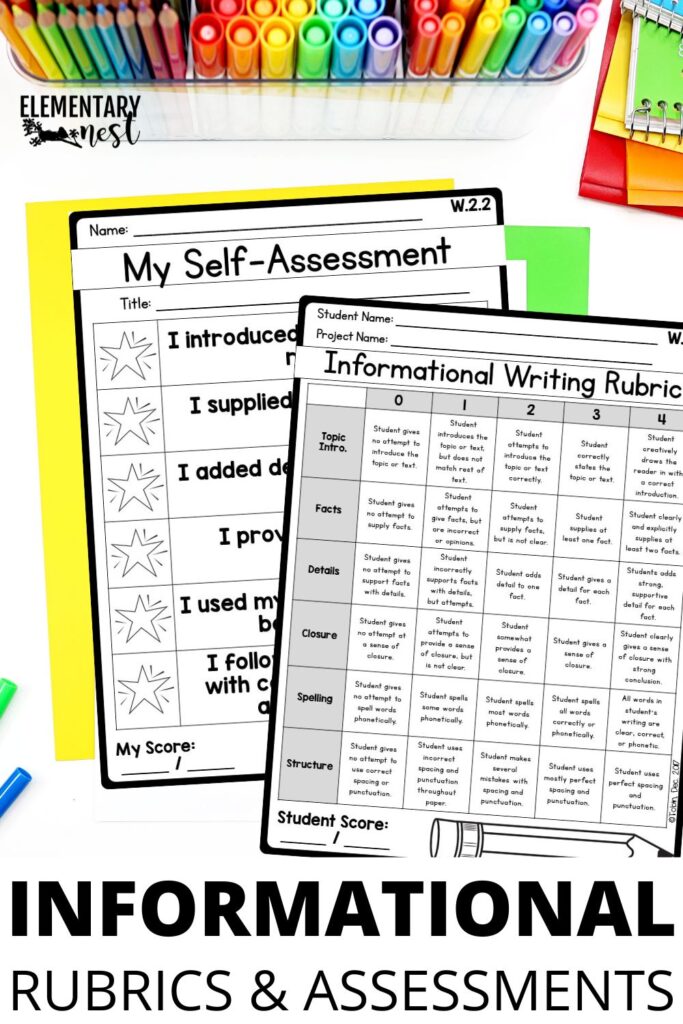
Then, it’s also important to let students assess themselves. Once they learn about informational writing and get lots of practice, it’s time to assess themselves. Asking students to self-assess is important because it allows them to truly understand the expectations of them in these types of writing.
Time to find your grade level!

Kindergarten Informational Writing: W.K.2

1st Grade Informational Writing: W.1.2

2nd Grade Informational Writing: W.2.2

3rd Grade Informational Writing: W.3.2

4th Grade Informational Writing: W.4.2
Want more writing tips?
- Tying writing into your math block
- Warming up for your writing block
- How to make their writing interactive
Interested in Free Graphic Organizers for Your Writing Unit?

Download your free narrative writing graphic organizers.