
As an elementary school teacher, you have bigger things to worry about than constantly changing ELA curriculum and standards. Lesson planning can be overwhelming, especially when there are many different components to consider. To help, I’ve put together a complete guide to mastering weekly planning for ELA instruction.
Not only will these tips streamline your planning process, but they’ll also help you create engaging and effective lessons for your students every week.
The Key Components of ELA Lesson Planning

Before we dive into the specifics, let’s first take a look at the key components of weekly planning for ELA instruction. These include:
- Analyzing standards and selecting learning objectives:
- We will discuss how to break down standards and choose the most relevant learning objectives that align with them. This targeted approach ensures focused instruction and student success.
- Using a pacing guide:
- Discover the secrets to crafting a pacing guide that keeps you on track and ensures you cover all the necessary material each week. With these tips, you’ll breeze through your lessons with confidence.
- Crafting engaging and balanced lessons:
- Learn how to infuse your lessons with a variety of activities and strategies that keep your students motivated and eager to learn. From whole group instruction to interactive games and technology integration, we’ve got you covered.
- Incorporating differentiation and scaffolding:
- Discover the power of differentiation and scaffolding techniques to meet the unique needs of every student in your classroom. With these tips for lesson planning, you’ll be able to create an inclusive and supportive learning environment where every student thrives.
- Allowing flexibility based on student progress: Embrace the importance of flexibility in your plans and instruction. Adjust your approach based on student progress, ensuring that no one gets left behind and everyone reaches their full potential.
If you consider these 5 components, you will be able to easily plan your weekly ELA instruction, keeping it engaging, well-balanced, and effective!
If you’re looking for in-depth lesson planning resources, click here for a free planning guide and sheets!
1. Analyze Your Standards and Develop Lesson Objectives

Firstly, for truly effective ELA lesson planning, you need to understand the expectations of your state standards. My recommendation for any teacher is to spend some time deconstructing their standards. This involves breaking down the standards into smaller components. Then, identify the skills and knowledge that students need to master in order to meet the standard. When you analyze the standards, it will allow you to select learning objectives that closely align with them.
I recently created a step-by-step video guide to Deconstructing Standards on my YouTube Channel! If you’d like to watch for more in-depth steps to analyzing your standards (and a freebie that will help you break them down), click the link here! Or, you can read my blog post, How to Understand Each Standard!
Once you have a clear understanding of the standards and learning objectives, you can begin to plan your lessons around them. This will ensure that your instruction is focused and purposeful.
2. Use a Pacing Guide To Map Out Your Year

Last week, I wrote a blog post about Understanding the Importance of a Scope & Sequence. So, I won’t go into depth and make this blog post longer than it needs to be. But, I want to reiterate the point that a pacing guide or scope and sequence can save you time (and sanity) when lesson planning in timely increments.
The reason a pacing guide is an important step in the weekly lesson planning process is that it allows you to focus on the actual lesson planning. When you create (or use a premade) pacing guide, half of the work is already done. This will have your year planned out for when you should be teaching each of the standards. Essentially, if you already have your standards planned, all you need to do is find or create your lessons & activities.
To read my post about pacing guides, click here.
3. Plan Weekly Lessons that Have Variety and Balance

Of course, we know that creating balanced ELA lesson plans is key to fostering student engagement and achieving optimal learning outcomes. By incorporating a variety of instructional strategies and activities, we can provide a well-rounded experience that caters to the diverse needs and learning styles of our students. Additionally, when we incorporate these elements, we create a rich and dynamic classroom environment.
These elements might include:
Whole-Group Instruction:
Whole-group instruction sets the foundation for learning and promotes a sense of community within the classroom. It allows teachers to introduce new concepts, model strategies, and provide explicit instruction to the entire class. Through engaging discussions, shared reading experiences, and interactive presentations, students gain a collective understanding of the lesson’s objectives. This sets the stage for deeper exploration.
Small-Group Instruction:
Small-group work provides an opportunity for targeted instruction and individualized support. By organizing students into smaller groups, teachers can tailor their instruction to address specific learning goals. Small-group activities promote active participation, foster collaboration, and allow for personalized feedback and guidance.
Independent Practice:
Independent practice plays a crucial role in solidifying skills and promoting student autonomy. By providing opportunities for students to work independently on activities, we empower them to take ownership of their learning. The can work through a productive struggle that reinforces skills an concepts. Independent practice allows students to apply newly acquired knowledge, reinforce concepts, and develop critical thinking and problem-solving skills.
Partner Work:
Collaborative learning through partner work enhances students’ communication, social, and teamwork skills. When students work together, they can engage in activities that promote a deeper understanding and the sharing of ideas. Partner work fosters a supportive and inclusive classroom environment, where students learn from and with each other, building strong interpersonal relationships along the way.
Some other things to consider in your ELA lesson planning:
Interactive Activities:
Interactive activities bring excitement and hands-on engagement to ELA lessons. They can take the form of interactive games, educational puzzles, or interactive whiteboard activities that make learning fun and memorable. Interactive elements allow us to tap into students’ natural curiosity and provide them with an immersive learning experience that enhances their comprehension and retention of key concepts.
Technology Integration:
Integrating technology into ELA lessons opens up a world of possibilities for student engagement and creativity. Technology can be used for reading, writing, and language activities. It offers interactive and dynamic ways to explore concepts and practice skills. This can also enhance student engagement, foster digital literacy skills, and connect learning to the modern world.
There are many educational apps and online platforms that provide individualized learning. With continuous skill assessment, these programs can be our best teammates when lesson planning for differentiation.
Variety in Skill Application:
It is also essential to provide multiple opportunities for students to apply their skills in various contexts. By exposing students to a variety of texts, we expand their understanding and enable them to transfer their learning across different genres. Moreover, skill application should not be limited to a single format. When we offer diverse activities, such as writing tasks, group discussions, presentations, projects, or creative assignments, we encourage students to explore different modes of expression and deepen their comprehension of the content. This approach allows students to engage with the material in more authentic ways. Thus, promoting a deeper understanding and mastery of the skills being taught.
4. Allow for Intentional Differentiation Within Your Lesson Plans

As educators, we understand that every student enters our classrooms with unique strengths, challenges, and learning styles. To create an inclusive and effective learning environment, it is crucial to incorporate differentiation and scaffolding into our weekly ELA plans. These strategies allow us to meet the needs of all students. And, they ensure that each learner is appropriately challenged and supported along their educational journey.
Some ways to incorporate differentiation and scaffolding into your weekly plans might include:
Activities & Assignments at Multiple Levels-
One powerful way to implement differentiation and scaffolding is by providing multiple levels of activities or assignments. For example, you can provide the same reading passage to your students at multiple different levels. All students will be reading the same story, and practicing the same skills, but at an accessible reading level.
By offering different entry points for learning, we can accommodate students with varying abilities and readiness levels. Some students may benefit from more scaffolded tasks to build foundational skills. While others may be ready for more complex and challenging assignments. By tailoring the activities to match students’ individual needs, we create opportunities for growth and success for all learners.
Support & Teacher Guidance-
Furthermore, offering extra support and resources for struggling students is a vital aspect of differentiation and scaffolding. This may involve additional guided practice, small-group or one-on-one instruction, or the use of supplementary materials to address specific learning gaps. By identifying areas where students may require extra support, we can provide them with the necessary tools. And, we can ensure their progress and boost their confidence.
Incorporating Technology For Specific Individualized Instruction-
Technology can be a valuable ally in differentiating instruction and scaffolding learning experiences for all students. Utilizing educational apps, online resources, interactive websites, and digital platforms allows students to access personalized content, receive immediate feedback, and engage in interactive learning experiences. Technology integration not only caters to diverse learning preferences but also helps foster digital literacy skills that are essential in today’s world.

The most direct way to plan for differentiation that I mentioned in the list above is Support & Teacher Guidance. For this, you need to protect time in your schedule for small-group and individualized instruction. This can look like centers, small-group rotations, one-on-one instruction, etc. During this time, you will work with students on skill-specific needs, provide supported (but challenging) skill application, and conduct ongoing formative assessments.
Incorporating differentiation and scaffolding into your weekly ELA plans is a testament to your commitment to meeting the needs of each and every student in your classroom. By providing multiple levels of activities, offering support to struggling students, encouraging independent learning for advanced learners, and leveraging technology, you create an inclusive learning environment where all students can thrive. Let’s celebrate the uniqueness of our learners and embrace the power of differentiation and scaffolding to unlock their full potential in ELA and beyond.
5. Be Flexible and Consider Student Progress During Weekly Lesson Planning
Finally, it’s important to allow for flexibility in your plans and instruction based on student progress. If you find that your students are struggling with a particular concept, don’t be afraid to pause and spend more time on it. Similarly, if your students are excelling, you may want to provide additional challenges to keep them engaged and learning.
By allowing for flexibility in your plans and instruction, you’ll be able to meet the unique needs of each student in your classroom and ensure that they are making progress and achieving their full potential.
Free Tools That Will Help You Plan!
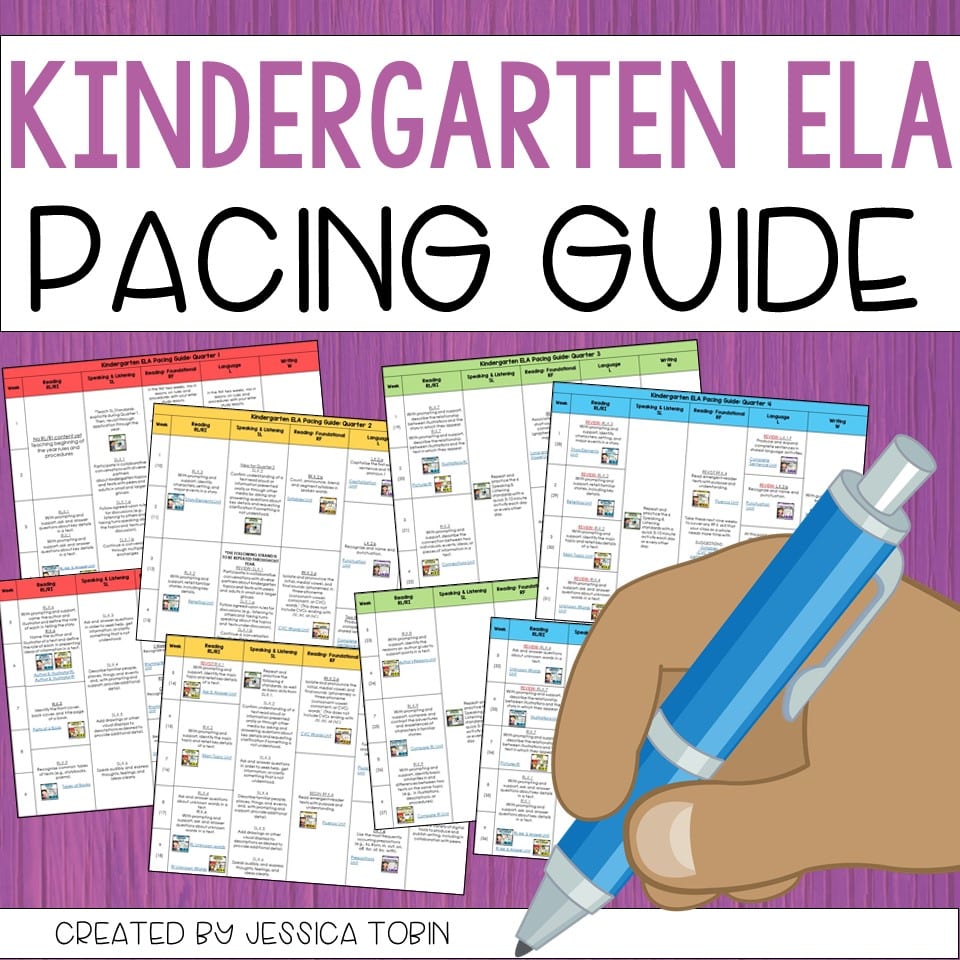


If you’d like to lighten your load, grab a set of my free pacing guides! The pacing guides seen in the photos above have every Common Core skill and standard planned for ALL six ELA domains for your grade-level. Each standard has a direct hyperlink to a complete unit for the CCSS skill. These units are fully complete with lesson plans, interactive activities, graphic organizers, reading passages, writing prompts, language printables, speaking and listening centers, reading foundational skills practice, assessments and so much more! This means no lesson planning, no prep, no stress for the ENTIRE YEAR.
Meanwhile, would you like to read more blog posts?