


Looking for effective ways to teach recounting and retelling stories? This post shares practical classroom tips and strategies that make story comprehension easy for kindergarten, first, second, and third grade students. You’ll find ideas for anchor charts, mentor texts, and hands-on activities that align with reading standards.
Building reading skills over four elementary grades:
- Kindergarten: retell familiar stories
- 1st Grade: retell stories and key details; identify moral
- 2nd Grade: recount stories, folk tales, fables; determine moral
- 3rd Grade: recount stories, folk tales, fables, myths; determine moral with supporting details
5 Key Tasks for Teachers:
1. Teach the Retell or Recount Strategy

There are many important pieces of this standard. The first thing you need to focus on is teaching a student how to retell or recount a story. No matter what type of text they are reading, recounting/retelling are the two most important power verbs from the RL2 standards in first, second, and third grade.

- Image Resource: RL.2.2
Create an anchor chart with a clear, 5-step process of retelling a story. You can use the 5-finger retell. This method makes it easy for a student to remember the story elements that they need to include!

Learning Resources Retell A Story Cubes, 6-Pack
Another great way for students to practice is prompts. My class always loved using retelling dice. This was fantastic when they read easy readers with partners and used dice to discuss the story. The link above is an Amazon affiliate link!
2. Introduce Types of Texts to Recount

After the students have a firm grasp on the retelling and recounting, then you can start to truly focus on the different types of fictional stories. Now, first-grade teachers, this is NOT required for you to teach, but it won’t hurt your firsties to learn different types of fictional stories. Second-grade teachers, you’re in charge of teaching folktales and fables. Third-grade teachers, you’re in charge of teaching folktales, fables, and myths.

- Image Resource: RL.3.2
I tried to keep up an anchor chart throughout the unit so that students could constantly refer to it if they had any questions about differentiating between the types of fictional text.
3. Next, Focus on Moral or Central Lesson

- Image Resource: RL.3.2
Since this standard is so complex, it needed to have three parts. The third part to teach when doing the retell/recount standard is to focus on the lesson, moral, or central message. This was always a difficult task to do because we have been teaching students to be so text-evidence based, but in many stories, the moral is not right there in black and white. It takes a lot of practice and inference skills to get lessons and morals mastered. Practice makes perfect.
4. Bring in Familiar Books for Practice

While part of this standard is not always text-based answers, the act of retelling does require students to use the text to find an answer. Looking back in the text after reading (more than once) is a very important strategy to use in retelling & recounting stories.

- Image Resource: RL.2.2
Using familiar texts with your students will help them focus less on the comprehension of the story and more on the actual standard skill.
5. Use Reading Passages to Practice Text Evidence
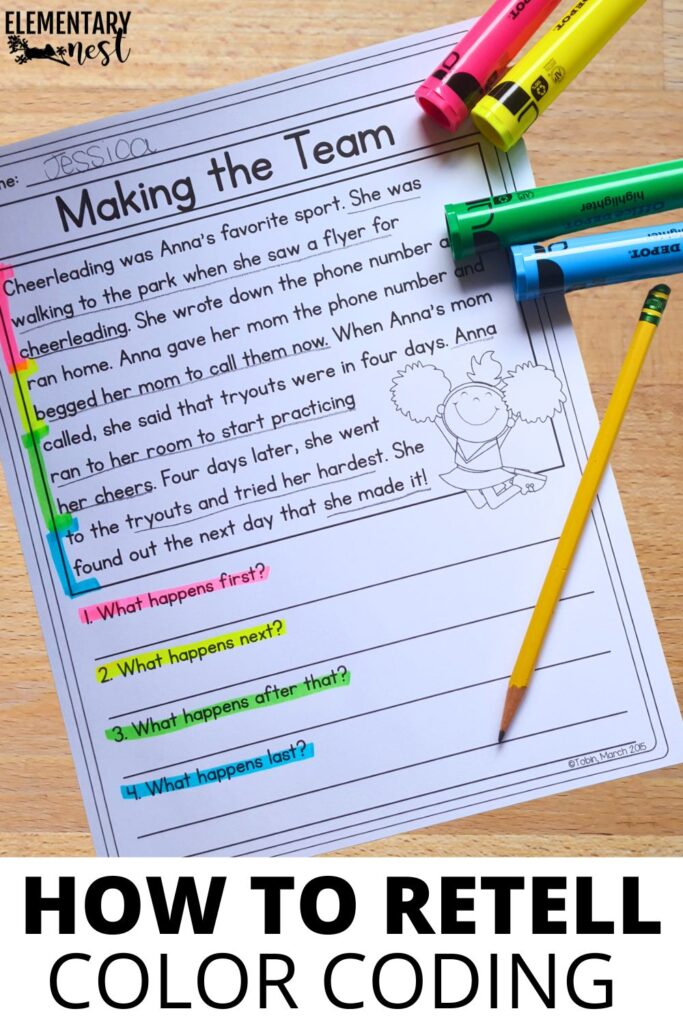
One thing that really helped my first and second graders when teaching the retelling standard was color coding. Underlining answers is always key, too! I never let my students turn in their reading passages and comprehension questions unless I see accurate underlines within the passage.
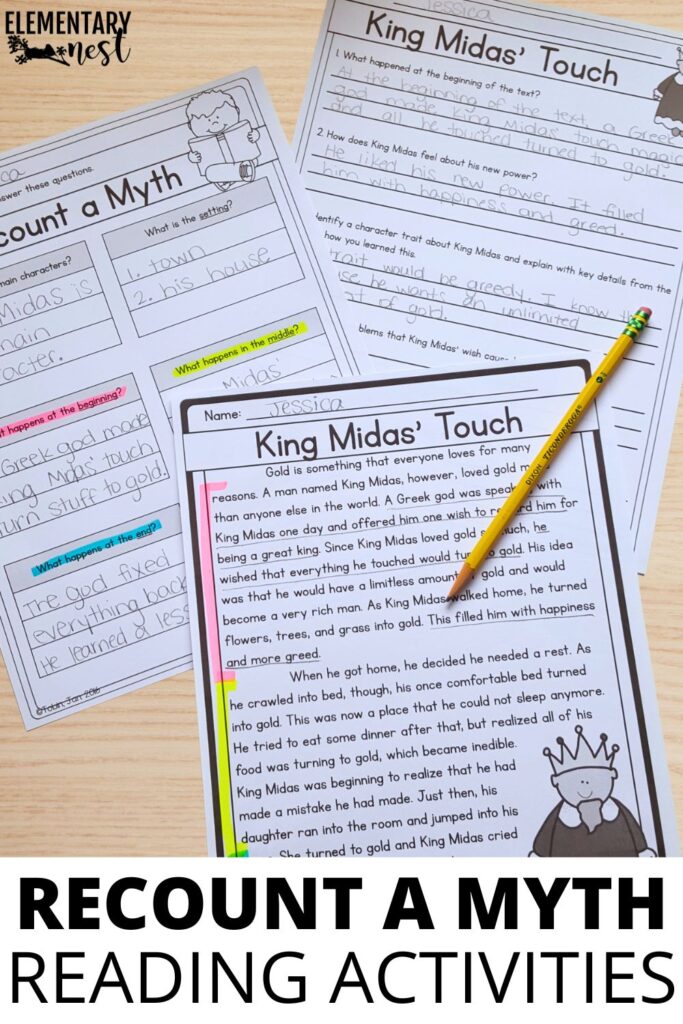
Other Ideas for practice
- Turn and Talk activities, whole group
- Task Cards
- Interactive Notebooks
- Passages
- Printables to use with real texts
- Read to Self Self-Checking Cards
- Read to Someone Self-Checking Cards
Need Mentor Text Ideas?
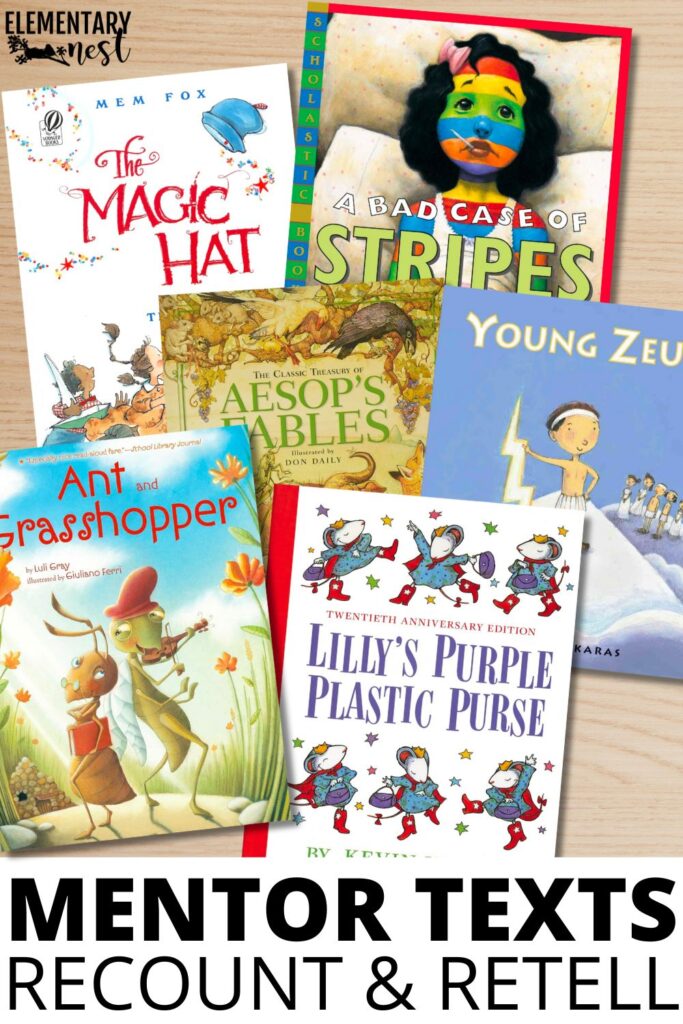
This is a list of six books for this literature standard, with affiliate links to Amazon.
Key skills to hit- retelling/recounting, moral/lesson, folk tales, fables, myths
- The Magic Hat by Mem Fox
- A Bad Case of the Stripes by David Shannon
- The Ant and the Grasshopper by Luli Gray
- Lilly’s Purple Plastic Purse by Kevin Henkes
- Aesop’s Fables Collection
- Young Zeus by G. Brian Karas (3rd Grade Only)
- Tops and Bottoms by Janet Stevens
Ready-to-Go Units for Teaching Recounting & Retelling
If you’re teaching Recounting & Retelling in your classroom and would like to plan without recreating the wheel, I have complete, no-prep units for you! Each unit comes with lesson plans, anchor charts, activities, graphic organizers, reading comprehension passages, an assessment, and more!

Kindergarten RL.K.2 Reading Unit

1st Grade RL.1.2 Reading Unit

2nd Grade RL.2.2 Reading Unit

3rd Grade RL.3.2 Reading Unit
Or… Check out the All-Year-ELA Membership!
With this membership, you will get all of my ELA standards-based units. This includes my standards-based materials for Reading Informational, Reading Literature, Writing, Language and Grammar, Vocabulary, Foundational Skills, and Speaking & Listening!