
Weather is one of the most exciting science topics for elementary students because they have many firsthand experiences with it already! In this post, I’m sharing my favorite weather activities, weather books, anchor charts, and experiments that will help you bring meteorology to life in your classroom. Whether you’re teaching weather patterns, precipitation types, or seasonal changes, these activities will engage your students and make learning about the weather fun and interactive!
This blog post is split into three sections:
- introduction to weather topics
- experimenting with weather
- reviewing new weather knowledge
1. Introductory Weather Activities

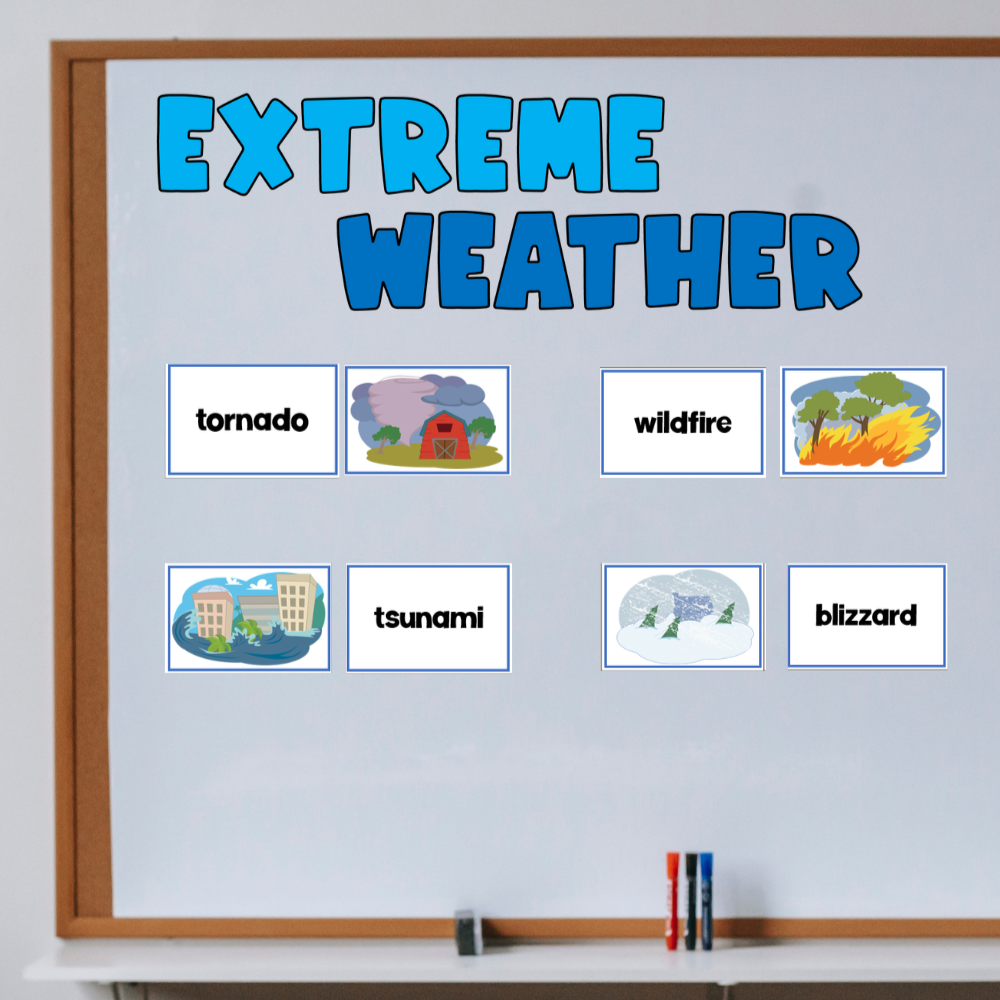
First, when starting out with the weather unit, ask students to list different weather patterns that they already know. Then, sort between dangerous and safe weather patterns and draw or write their responses as students list them.

(Source: Cutting Tiny Bites)
Then, head on down to the local library and grab some books for your students. Put them in a reading center or add them to your daily lesson plans. Introducing nonfiction and fiction stories about weather is a great way to start your unit.
Here are links to a few of my favorites for teaching weather. Each of these are affiliate links to Amazon:
- Everything Weather by Kathy Furgang
- Extreme Weather by Thomas Kostigen
- The Everything Kids’ Weather Book by Joe Snedeker
- Extreme Weather by H. Michael Mogil
- Weather by Kristin Rattini
(Source: Weather Unit)
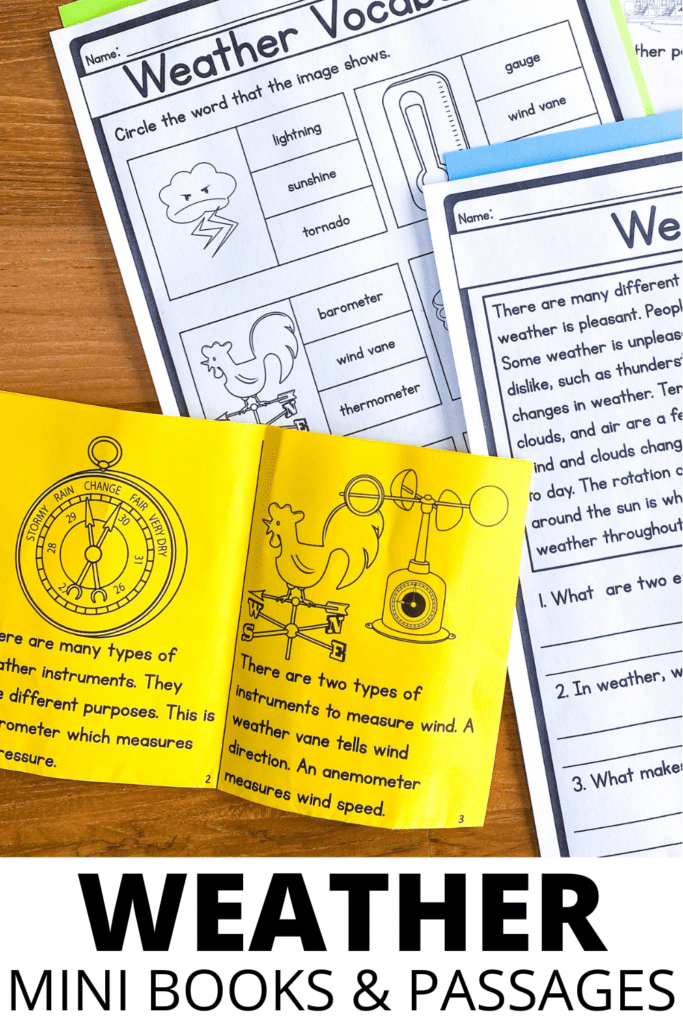
This weather unit comes with reading passages, comprehension activities, writing activities, and other no-prep activities. These will help students to learn about weather, disaster weather, clouds, weather instruments, and more.
2. Hands-On Experiments & Weather Activities

(Source: Ideas by Jivey)
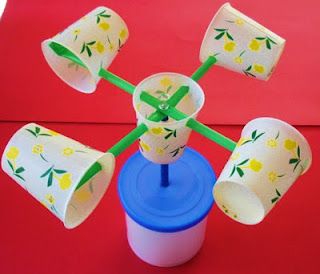
This homemade anemometer is an amazing idea to teach students about weather instruments. Teaching wind direction and wind speed is important in understanding weather patterns and climates.
(Source: Learning Ideas Grades K-8)
Above, you see another picture of a homemade anemometer.
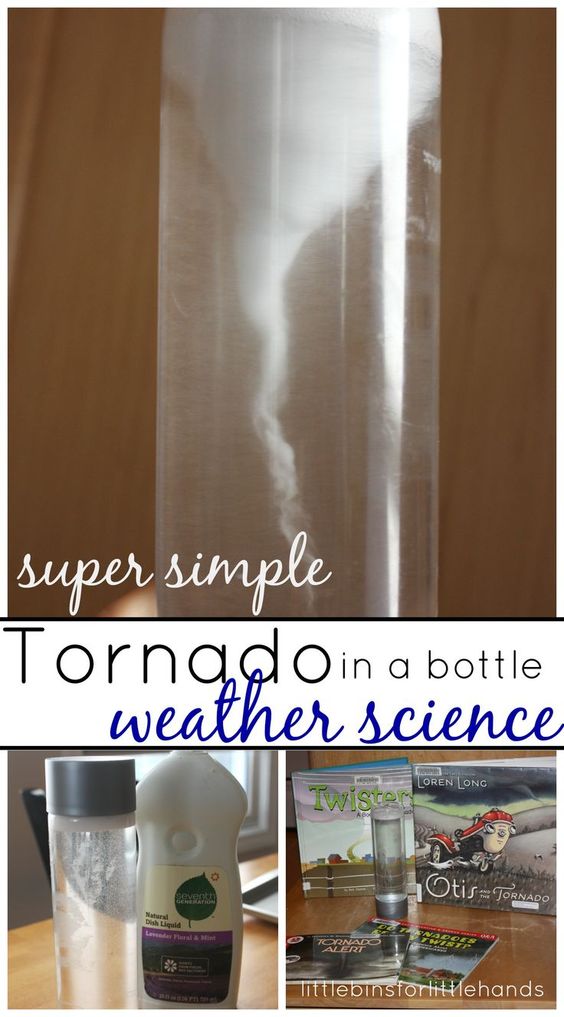
(Source: Little Bins for Little Hands)
Above, you can see the science experiment for making a tornado in a bottle. I remember these bottles from my childhood. I loved playing with these kinds of projects, and it helped to show me the way that twisters formed, too. This is one of those perfect weather activities that will engage students and help them understand it deeper.

(Source: Learn Play Imagine)
Above, the blogger said she couldn’t get the spark photographed. However, it’s still a wonderful experiment of how lightning can form when teaching weather.

(Source: Coffee Cups and Crayons)
This exciting activity shows students how rain falls from clouds.
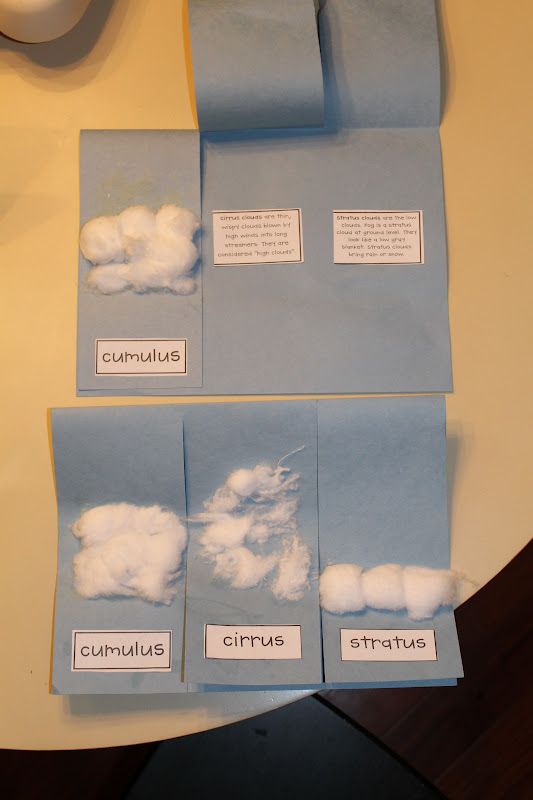
(Source: Crunchy and Green)
I love this quick and easy activity to teach students the different types of clouds they find in the sky.
3. Reviewing New Knowledge:
After introducing weather concepts through books and hands-on experiments, it’s important to take time for students to review and reflect on their learning. Giving them opportunities to discuss, write, or illustrate what they’ve learned helps reinforce key ideas and clear up any misconceptions. Weather activities like sorting types of precipitation, creating a daily weather journal, or using anchor charts for class discussions can help students make connections and retain information.
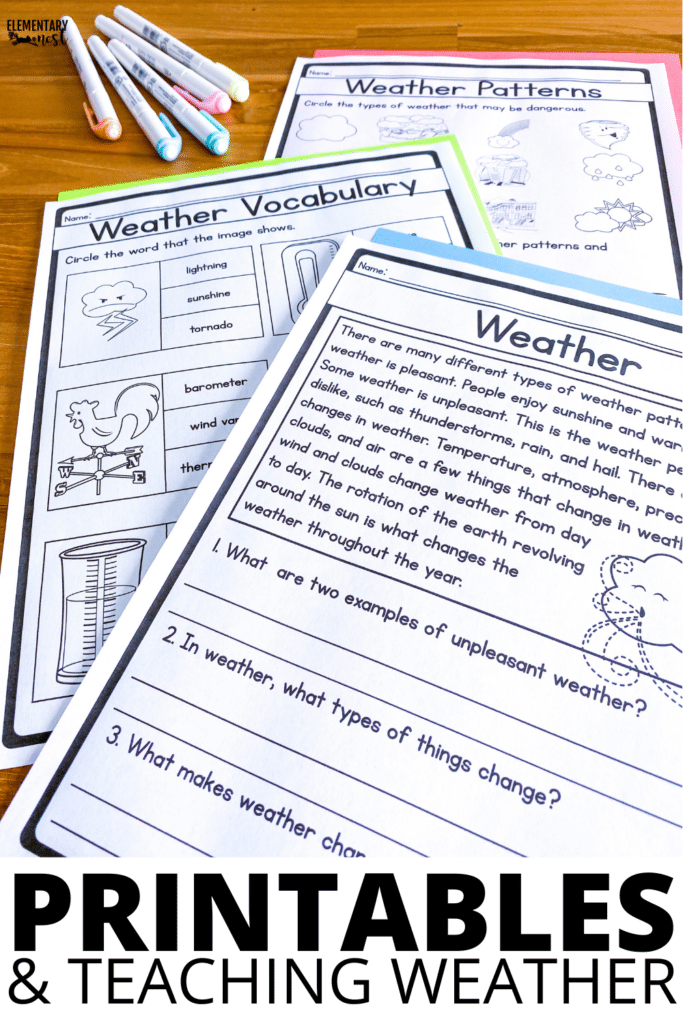
(Source: Weather Unit)
Download Printable Teacher-Approved Weather Activities:

WEATHER READING PASSAGES & WORKSHEETS
NONFICTION FLIP BOOK

TEACHING SLIDES & NOTE-TAKING SHEETS
Interested in a set of FREE Weather activities?
FREE WEATHER ANCHOR CHART & WRITING ACTIVITY