
Teaching main idea and key details is a cornerstone of reading comprehension in elementary grades. This blog post gives teachers practical strategies and engaging activities to help students master these skills. From anchor charts and mentor texts to interactive lessons and videos, you’ll find ideas that fit any classroom. Use these tips to build confident readers who can identify what a text is mostly about and the details that support it.
Introducing Main Topic or Main Idea
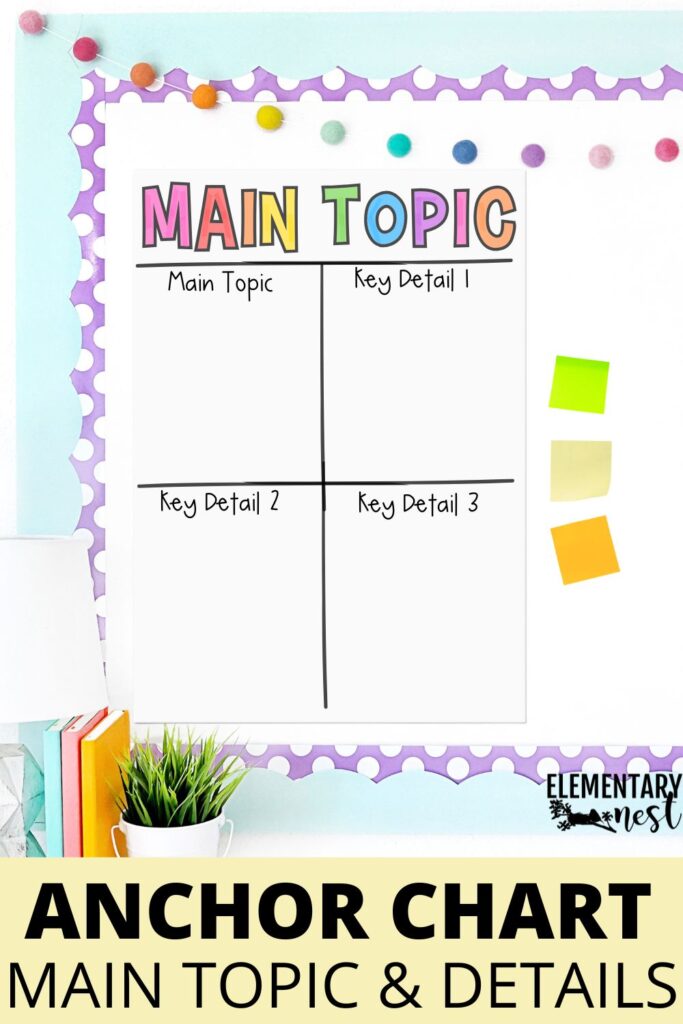
Anchor charts can (and should) be clear and simple. This will make them easy to understand and reference later. For Main Topic and Main Idea, you can use similar outlines. Either a four-block graphic organizer like the one above: including a space for the Main Topic and three spaces for key details, or an easy-to-remember idea like an ice cream cone: with three scoops for key details and the cone at the bottom as the main idea.

Anchor charts make concepts like main topic easier for students to grasp. This example uses sections for details and a main topic header. Students can contribute ideas during the lesson, making it interactive and collaborative. It’s a strong tool for reinforcing the difference between broad topics and specific details.
Teaching Main Topic or Main Idea Without Texts
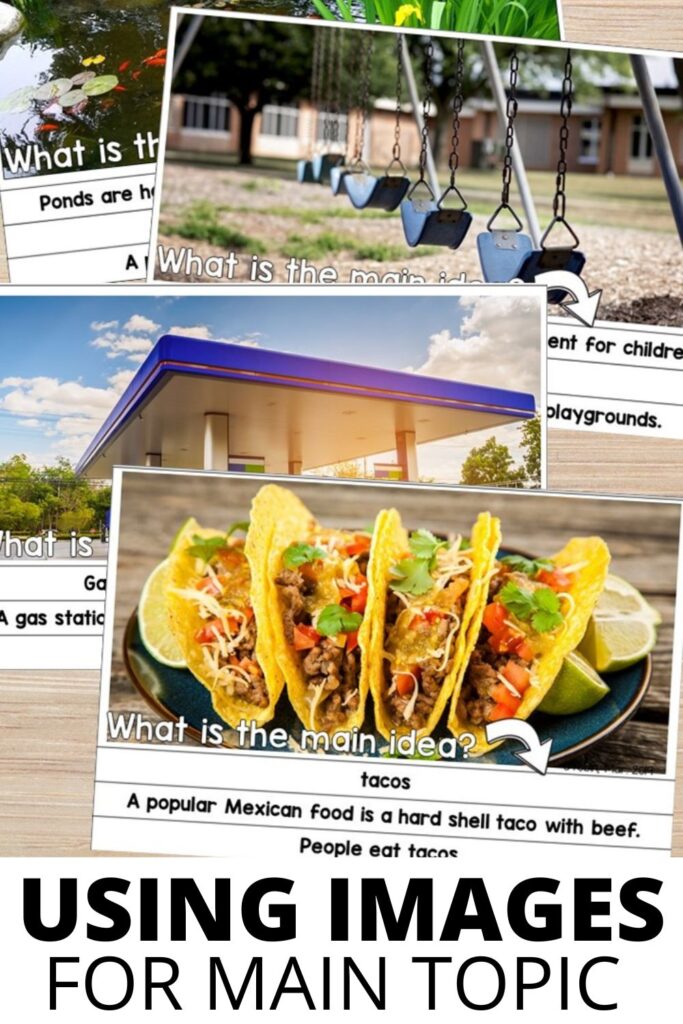
A simple way to introduce main topic or main idea is through pictures. Students can look at an image and describe it in one or two words, which builds the foundation for identifying a text’s main topic. Lesson activities like these make the skill more accessible for young learners. It’s a great strategy to use before transitioning into longer reading passages.
Focus on Key Details that Support Main Idea
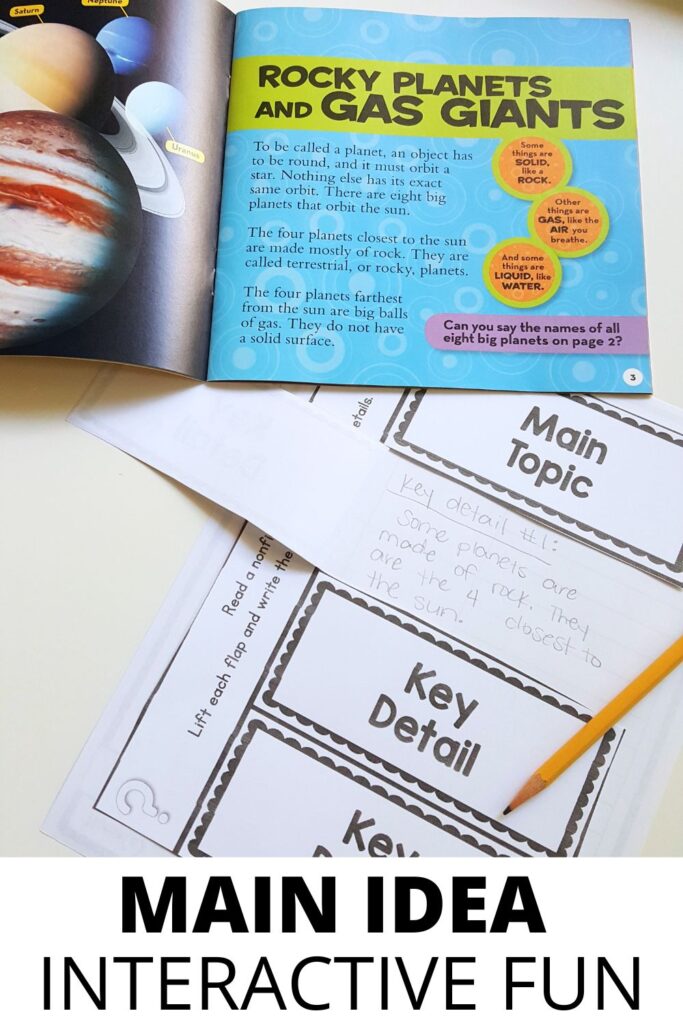
Allow them to practice with nonfiction texts such as National Geographic books. Give them an interactive notebook activity where students work independently to read about a topic, then fill out the three key details for the main topic.
Comparing Main Topic and Main Idea
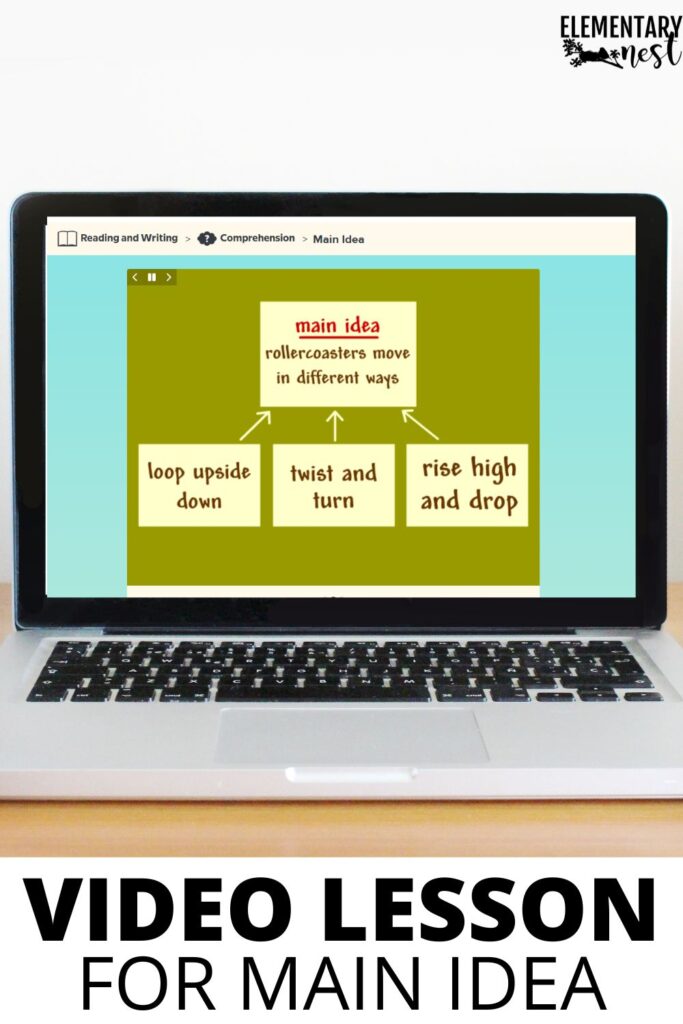
(Source: Brain Pop Jr. YouTube)
In 3rd grade, learning begins to change from topic to idea. This requires a bit more skill from the students because they’re not only finding a topic; they’re now finding the idea from the author. This free video will help your third graders set up the difference between main topic and main idea. Stop the video throughout and have students turn and talk with partners to discuss their new knowledge.
Suggested Read Alouds
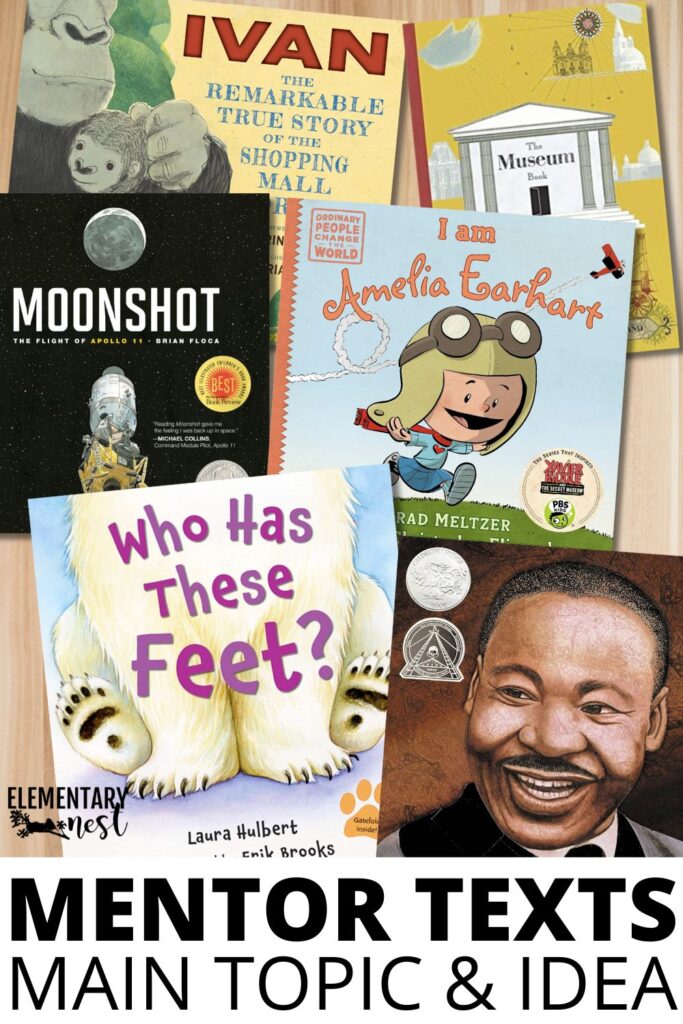
Read alouds and mentor texts are incredibly important to model the skill of main idea and main topic. I’ve listed six possible book titles to use while teaching main idea and main topic, however, almost all informational texts are great to use to test the skill. All the books that are linked in this blog post are affiliate Amazon links.
My Recommendations:
- Martin’s Big Words by Doreen Rappaport
- Who Has These Feet? by Laura Hulbert
- I Am Amelia Earhart by Brad Melzer
- Moonshot: The Flight of Apollo 11 by Brian Floca
- The Museum Book by Jan Mark
- Ivan: The Remarkable Story of the Shopping Mall Gorilla by Katherine Applegate
Easy Main Idea Activity Using One Piece of Paper
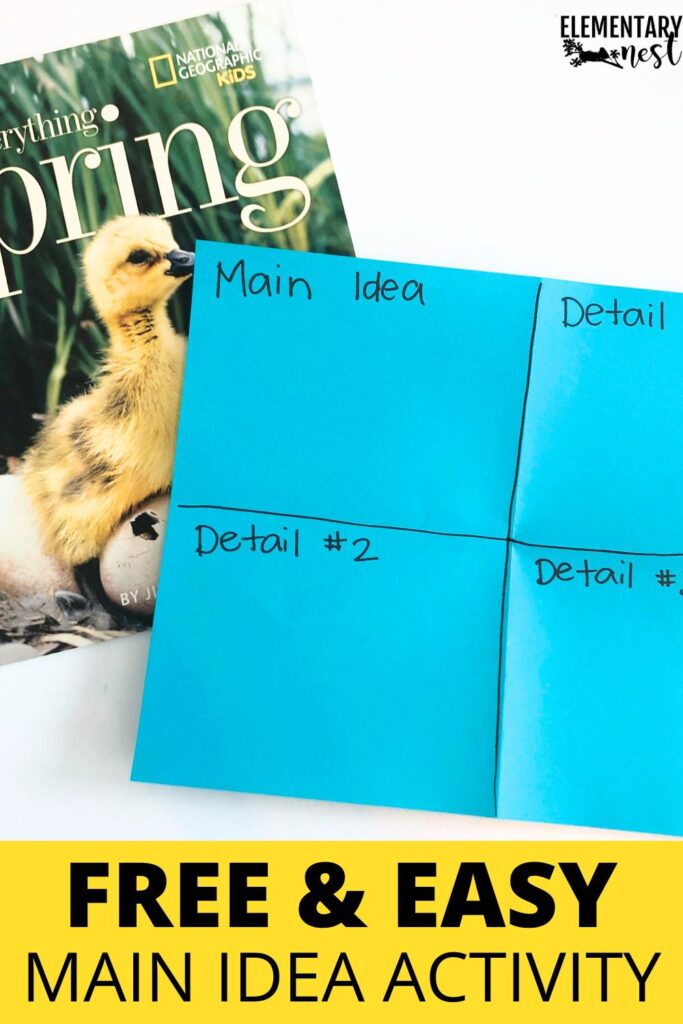
This free classroom activity is a simple way to introduce main idea and key details. Students fold a paper into sections for the main idea and details, then fill it in after reading. It’s low prep, quick to implement, and works with any nonfiction text.
Focusing on Multi-Paragraph Texts
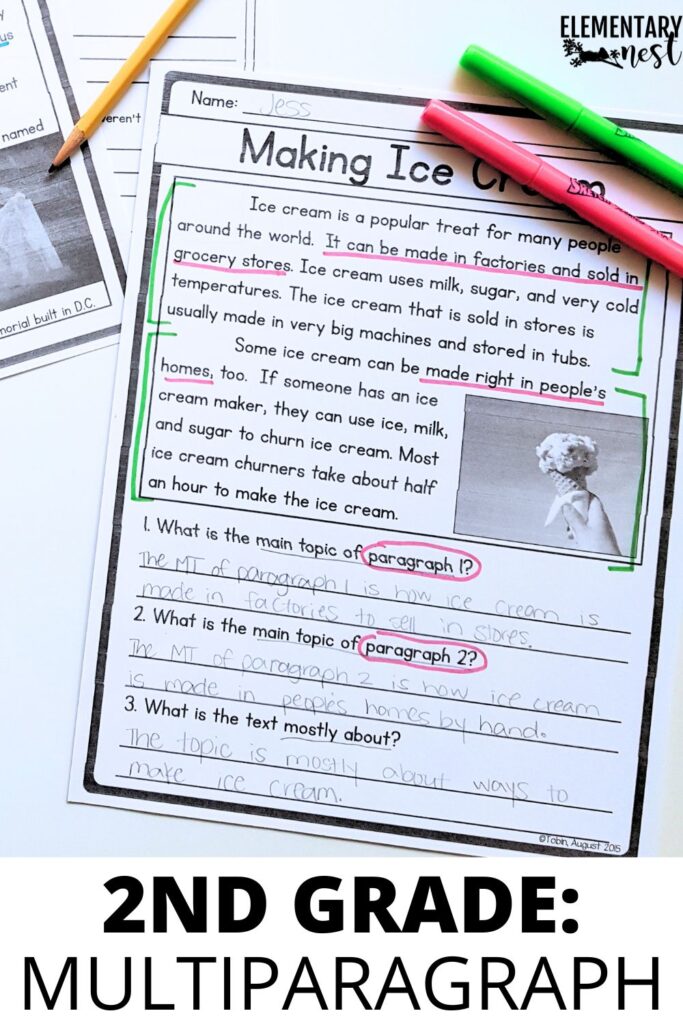
As students grow, they need practice identifying main ideas across longer texts. This activity helps them find the main topic in each paragraph, then connect them to form the overall main idea. It’s a valuable step for building advanced comprehension skills. Teachers can use these passages to scaffold from simple texts to more complex readings.
Always Revisit Main Topic After 3rd Grade
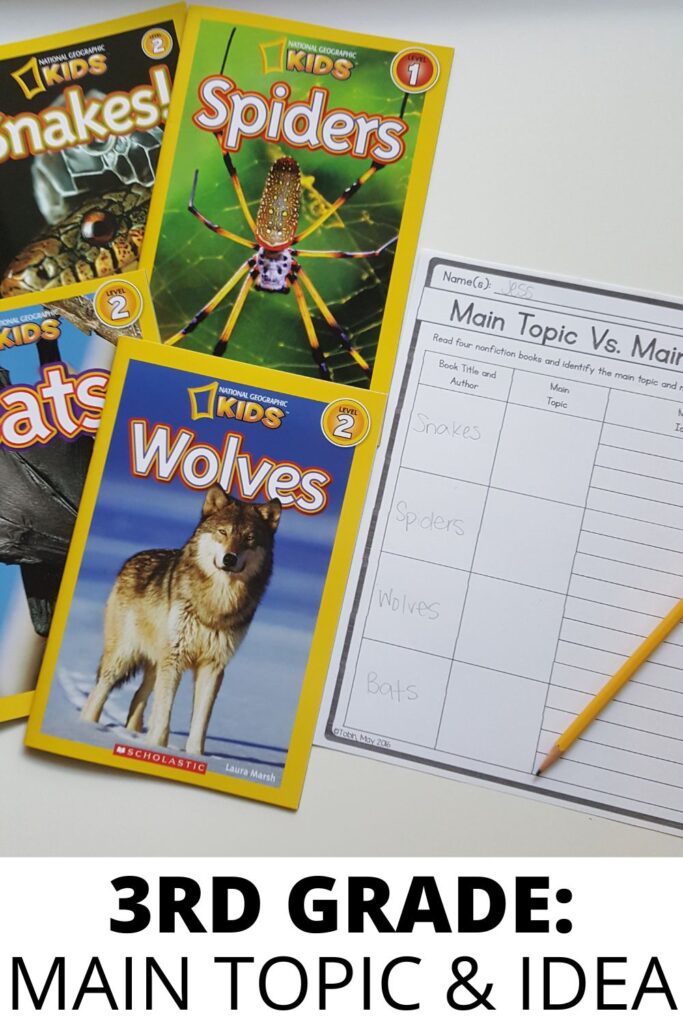
In 3rd grade, you can introduce main idea, but it’s a great idea to always review the main topic, too. Students often confuse main topic with main idea, so it’s important to teach the difference clearly. Worksheets and mentor texts like this give side-by-side practice to build understanding. With repeated exposure, students will confidently distinguish between the two concepts.
Grab some resources to help you!
The resources seen in today’s post are from my ELA units. Each grade level has a complete unit for teaching Main Topic or Main Idea with lesson plans, worksheets, reading passages, and more. Available from Kindergarten to 5th Grade.

Kindergarten Ready-to-Go Lessons & Activities

1st Grade Ready-to-Go Lessons & Activities

2nd Grade Ready-to-Go Lessons & Activities

3rd Grade Ready-to-Go Lessons & Activities

4th Grade Ready-to-Go Lessons & Activities

5th Grade Ready-to-Go Lessons & Activities
Want a free digital Main Idea and Details worksheets to get you started?

FREE MAIN IDEA ACTIVITY
This free digital activity comes with links to Seesaw and Google Slides for your students. They will practice their main topic or main idea skills.
Interested in reading more ELA blog posts?
- Main Idea and Main Topic Anchor Charts
- Mastering Author’s Point and Reasons
- Point of View Teaching Tips
- Understanding the Tricky Making Connections Standard
Or… Check out the All-Year-ELA Membership!
With this membership, you will get all of my ELA standards-based units. This includes my standards-based materials for Reading Informational, Reading Literature, Writing, Language and Grammar, Vocabulary, Foundational Skills, and Speaking & Listening!