


If you’ve ever had students come back in the fall and feel like they’ve forgotten everything from the previous grade, you’re not alone. The dreaded summer slide is real, and it can undo a lot of the hard work we put in all year long. The good news? With a little planning, you can help prevent it… And luckily, it doesn’t have to be complicated.
Here are three easy strategies you can use to support your students over the summer and help them hang on to the skills they’ve worked so hard to build.
1. Send Home a Parent Suggestion Letter
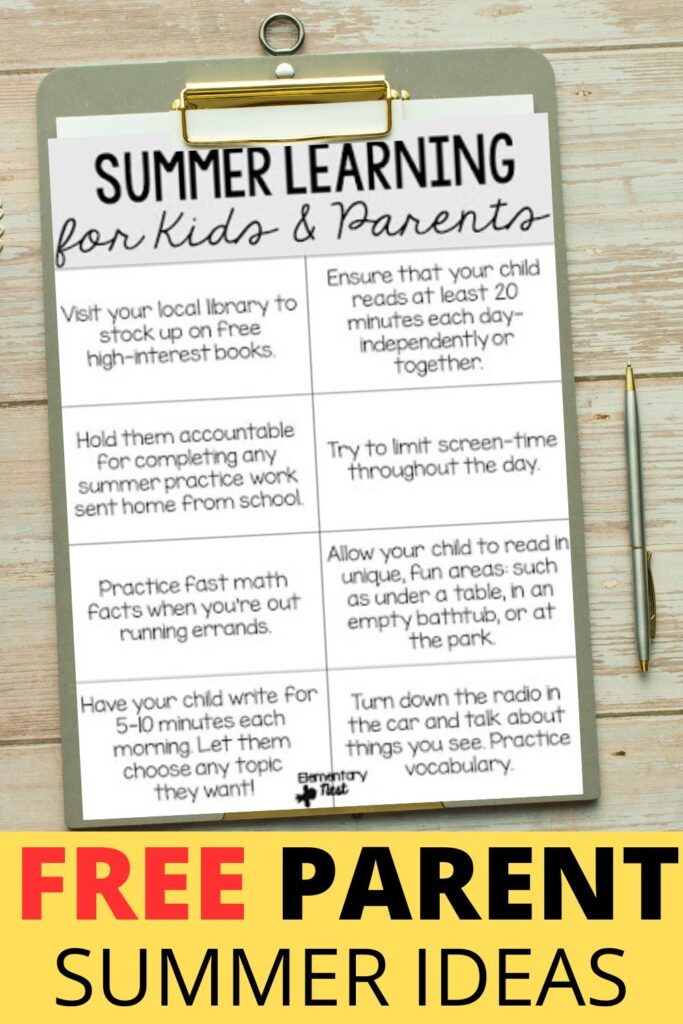
One of the most effective (and easiest) ways to prevent the summer slide is to get families involved. Many parents genuinely want to help but aren’t always sure how. That’s where a simple letter or checklist can make a big difference.
Before the school year ends, send home a quick note explaining what the summer slide is and why it matters. You can also include a checklist of easy ways families can support learning at home… things like going to the library, practicing math facts in the car, or encouraging daily reading. Use this FREE summer slide paper for parents!
Parents don’t need a ton of prep or materials. They just need to be aware and feel confident about how they can help. If you’re interested, I’ve created a ready-to-go parent letter you can download and send home. It’s free and makes that last week of school a little easier!
2. Summer Review Practice Packets

You’re not the only one who gets a little worried thinking about students going two whole months without any reading, writing, or math. That’s why I started sending home summer review packets! It makes a difference for both the students and the parents!
The goal here isn’t to load kids down with work. Instead, it’s about offering light but consistent practice. Think: reading 20 minutes a day, plus a short activity or two that helps them revisit key concepts. These packets help keep skills fresh without overwhelming students (or parents).
Here’s how I prep mine:
- Print the packet 2-sided to save paper
- Cut the book pages in half
- Stack and staple them together
Check out the four grade levels that I have:
- Kinder (summer between kinder & 1st)
- 1st Grade (for the summer between 1st & 2nd)
- 2nd Grade (between 2nd & 3rd)
- 3rd Grade (use for between summer of 3rd & 4th)
- Each packet includes 30 days of review activities covering reading, math, writing, and language. They’re fun, engaging, and easy to complete at home. Perfect for preventing that skills dip we often see in August and September.
3. Set up an email address!

This is one of my favorite low-key ideas: create a summer email address for your class and invite students to check in throughout the break! It’s a great way to stay connected and keep learning conversations going even after the final day of school. You can encourage students to email you when they finish a book, finish a page in their summer packet, went on a vacation, etc. Use a class-specific name like mstobins2025class @ gmail.com so you can keep them all in one spot!
It doesn’t need to turn into another inbox you have to manage constantly… Just a fun way to keep that teacher-student connection alive while helping them stay motivated to keep reading and learning.
Need Low-Prep Summer Packets to Send Home? Try these:
Each packet includes 30 days of simple, engaging activities that cover essential reading, writing, math, and language skills. It’s enough to keep brains sharp over the summer without overwhelming kids (or parents).
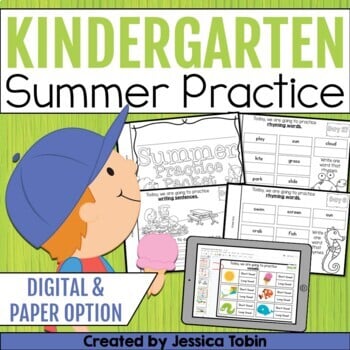
Summer Between Kinder and 1st Grade Review Packet

Summer Between 1st Grade and 2nd Grade Review Packet
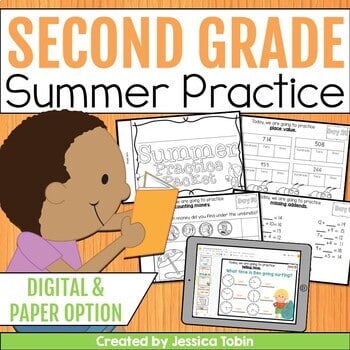
Summer Between 2nd Grade and 3rd Grade Review Packet
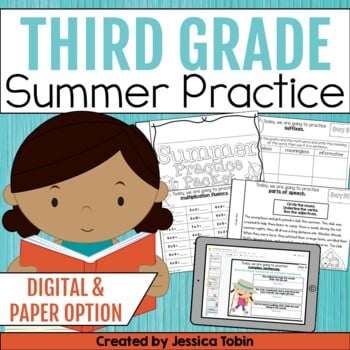
Summer Between 3rd Grade and 4th Grade Review Packet